“Milton Bradley” game piece (2012)

Following is a detailed description of my chance operation game piece I will be presenting at CageFest, a week long celebration of the ideas of John Cage. This performance will be on March 24th at the CoRK Arts District in Jacksonville. It will be part of the all day event titled Circus of Happening: A Chance-Determined Series of Arranged Convergence.

Milton Bradley (2012) is a chance operation piece based on the structure and advancement techniques used in family board games. The full description of the operation is “chance operation within finite parameters using board game mechanics resulting in instant compositions.” Rules and parameters are followed in order much the same way as board game participation.

Participants are positioned around a table. Before commencement, the players have selected three instruments and placed each in separate groups, Blue, Red, or Yellow, with Blue being their primary instrument.

  1. The first player to take their turn spins the dial. The dial will determine the number of participants to play on this particular piece. The spinner will land on either solo, duo, trio, quartet, leader decides, high roller decides, exquisite corpse, or blinder quartet.
    • Solo, duo, trio, and quartet are self-explanatory and the participants are chosen by the leader, or player in charge.
    • Leader decides: the player in charge determines how many and who is playing that piece.
    • High roller decides: The remaining players roll an eight sided die. The player with the highest number rolled will determine the participants.
    • Exquisite corpse: All players will perform but will play one at a time, beginning with the leader, moving right to left. Each player will continue from the previous players end point, which will be random and determined by the players themselves.
    • Blinder quartet: All players will participate and will play over each other, disregarding anything the others are playing.
  1. The leader rolls large die to determine length of piece, from one to six minutes.
  2. The leader draws a card from the deck to determine the interpretation. This may be either a style description, a photograph, a drawing, an emotion, a situation, or the interpretation of a graphic score. The interpretation of the card is completely up to the leader of the piece and any instructions to the participants is allowed.
    • If a graphic score card is drawn, the graphic score will be projected behind the participants and will also display on a laptop on the table.  The graphic score can be divided up, sectioned, and designated by the leader in any way they wish.
  1. Finally, the leader will select a color tile from the grab bag. This will determine instrumentation.

Tile colors:
Blue: primary instrument of participant
Red: secondary instrument
Yellow: third instrument option
Green: leaders choice. Leader will select the instrumentation for participants.
Black: participants will select their own instruments to play in the piece.

  1. Timer will be set for the minutes determined in step 2. When leader is ready to begin he/she will begin the timer. Buzzer will designate the end of the piece.
  2. Player to the right will be the next leader.

Milton Bradley (Nov. 8, 1836-May 30, 1911) worked as a draftsman, patent agent, and lithographer, and owned the first color lithography shop in Massachusetts. An American game pioneer, Milton Bradley was credited by many with launching the board game industry in North America.

Struggling to find a new way to use his lithography machine, Bradley visited his friend George Tapley. Tapley challenged him to a game, most likely an old English game. From this encounter, Bradley conceived the idea of making a purely American game. He created “The Checkered Game of Life”, which had players move along a track from Infancy to Happy Old Age, in which the point was to avoid Ruin and reach Happy Old Age. Squares were labeled with social/moral positions from honor and bravery to disgrace and ruin. Players used a spinner instead of dice because of the negative association with gambling.

Introduced in 1860 and considered to be the first “family board game”, The Checkered Game of Life was an instant success. In 1864 Bradley and his business partners formed Milton Bradley & Company. He bought out his partners in 1878, and re-named the business the Milton Bradley Company.

Since Bradley’s death in 1911, the business he founded has introduced such enjoyable diversions as Battleship in 1931, Chutes and Ladders in 1943, Yahtzee in 1956, Operation in 1965, Twister in 1966, and Connect Four in 1975. To celebrate the company’s centennial, Bradley’s original game was re-designed and re-introduced, its name shortened to The Game of Life, in 1960. The Milton Bradley Company became a subsidiary of Hasbro in 1984, and Parcheesi and Scrabble became Milton Bradley games after being purchased by Hasbro in 1989.

Recaps and Looking Ahead

Whew, this has been a roller coaster of a ride the past couple of weeks. It all began with a stellar performance with Crater Tater February 18 at the Copper Rocket and ended up last night at the bring-down-the-house style party with the Delusionaires reunion at Will’s Pub. Both are intensely great bands that I am proud to be part of.

Sandwiched in between these two shows Keaton Orsborn, Lucy Bonk, Jadi Lane and I rented a tank and headed North, performing live conducted improvisation interpretations of “The Fortune”. First stop was Conundrum in Columbia, South Carolina. Owner Tom Law showed up the real Southern hospitality and was an incredibly gracious host. It was the premier performance of The Fortune and worked well as a trio of electronics, field recordings (Keaton), more electronics, bowls, waterjars (Lucy), game calls, reeds and the voice of John Ajac provided by my laptop, not to mention the visual presentation that accompanied the performance, courtesy of Keaton and Jadi.

The following performance was at The Stone in New York City. The Stone is a legendary performance space that provides a venue for intense music. There we were joined by my old friend Mario Schambon on percussion. This brought it all together! The performance was amazing and I am very happy with the way it came off. Thanks to Al Margolis  and Pogus for inviting us to perform during his curated event.

Tonight (March 3) will find me in Gainesville for Laboratory Music 5. The Lab Music series are always a blast and it’s always great to see my friends.

Coming up later this month I will be presenting my chance operations piece, “Milton Bradley”, in Jacksonville on the 24th, the Civic Minded Five will present performances by Jaap Blonk (March 25), Fred Ho (March 25), Wolter Wierbos (April 1), David Manson (April 1), and Endangered Blood (April 8).

One final note: Another glowing review of The Fortune CD released on Ilse. This one comes to us from The Free Times out of Columbia, SC:

Jim Ivy’s The Fortune – As if one needed further proof that Tom Law’s little art space (Conundrum) could bring in top shelf avant garde music: two days after this gig, Florida improvisor Jim Ivy presents the very same program at John Zorn’s legendary New York City avant outpost The Stone. A collaboration between Ivy, a saxophonist by trade, and writer John Ajac, The Fortune blends bleating reed instruments, oscillating electronics and shamanistic spoken word into a haunting and harrowing work of music, an aural story that unfolds on a sonic canvas.

~ Patrick Wall

 Thanks for the kind words Patrick.

The Fortune Hits The Road

With exactly two weeks before I hit the road with a pair of Florida electronic musicians to perform live versions of The Fortune, there is far too much to do. Using graphic scores and hand signals, the live version of the improvised music/spoken work collaboration between myself and writer John Ajac will be stretched into many different forms. Although John will not be able to make the mini-tour, his voice will be there.

Traveling with Lucy Bonk (homemade electronics, percussion), Keaton Orsborn (electronics, manipulated field recordings) and Jadi Lane (projection, documentation) will definitely be an adventure. We perform at Columbia, South Carolina’s Conundrum on Thursday, February 23. This will be the premier performance and since we have not performed together previously, it will be a new experience for all of us.

With just enough time to make it up the east coast, weather permitting, Saturday, February 25 will find us at The Stone in the East Village of Manhattan performing the 10pm slot. There, we will be adding percussionist Mario Schambon to the ensemble.

Thanks go out to Al Margolis for the invitation to participate in the Pogus curated events at The Stone, and to Tom Law for giving us the opportunity to perform at Conundrum.

As far as other things going on: Crater Tater will be performing at the Copper Rocket next weekend, The Delusionaires one-time only reunion on March 2nd, Laboratory Music #5 March 3rd in Gainesville, and I am in the process of working out the details for my chance operation performance at CageFest, a weeklong event in Jacksonville celebrating the 100th birthday of John Cage, in late March. I am hoping to present a wind and brass quartet. Stay tuned.

Now, back to work before I get too far behind…

Nice Words From New York City’s DMG

The Fortune is now available at Downtown Music Gallery in NYC. As with all releases they offer, the staff, headed by Bruce Gallanter, writes reviews and gives insight into the release. Thanks for the kind words!

JIM IVY/JOHN AJAC – The Fortune (Ilse 25; USA) Jim Ivy on alto & soprano saxes, feedback, oscillators, real & sampled piano & gamecalls and John Ajac on voice & text. I’ve known Florida-based improviser Jim Ivy since the early days of the Victo Festival when we met in the late eighties. He has collaborated with Davey Williams as well as a number of players from the Orlando area. I wasn’t familiar with Mr. Ajac before this but he does offer some interesting words to this disc. I’ve heard Jim play sax in the past but here he is concentrating on a variety of soundscapes. This disc includes four pieces which are titled acts like in a play. “Act One: The Devices of Wicked Men” features some eerie waves of feedback while John describes the last thoughts and words of a captured Native American. The feedback builds and expands in shifting layers and is used most effectively. It is rare to hear anyone else besides John Zorn playing mouthpieces & gamecalls but this is what Mr. Ivy does so well on a few of these pieces, often recalling the time when Mr. Zorn played reeds mostly this way. Half of these pieces are instrumental and do a fine job of exploring and setting the mood in between the others acts. Each act describes a scene or short story with compelling backing from Mr. Ivy’s thoughtful and often hypnotic sonic palette. Mr. Ajac’s words dip into some wild west-like imagery providing us with different scenes to contemplate. A strong duo offering from a couple of freaks in Florida.

– Bruce Lee Gallanter, Downtown Music Gallery

First Review of The Fortune

Released on the Ilse label a little over a month ago The Fortune, a collaboration between myself and writer John Ajac, has slowly started showing up in the hands of music critics and reviewers. The following review comes courtesy of Vital Weekly, a weekly webcast,  which is free to download. www.vitalweekly.net/812.html

Also improvised but then of a different nature is a duo disc by John Ajac, who wrote a bunch of text and speaks them, along with music by Jim Ivy, who plays alto and soprano saxophone, feedback mixer, dual oscillators, real and sampled piano, sampler, mouthpieces and gamecalls. If I’m correct – which I usually am not – the story is about the goldrush. I am not too fond of spoken word CDs, although Ajac tells it with quite a nice voice. The music, however, is very nice. It is improvised but doesn’t rely on one instrument at a time. Ivy’s playing is at times loud, pure sinewave-like with noisy outbursts. Maybe some of the machines are on auto-play, while Ivy plays on top. He makes some interesting music that fits very well with the story. He plays the saxophone in a more traditional way, but the electronic parts make up for a more experimental play in the total picture of music and text. I think this is a great release, but not one that I would play very often. That’s not due to the music, but more of the spoken word, which, again, is not bad, but not something I’d like to hear a lot. (FdW)

I wish to thank Vital Weekly for taking the time to listen to my work. One note, the story is not about the goldrush. It is about the hanging of an Indian medicine man and what happens as a consequence.

I think it is a damn positive review. I knew it would not be for everyone, with spoken word as the main collaboration. On the other hand, I think it will reach into a different area of audience. That is my hope.

Upcoming Shows

As the year winds down I have a few shows around Florida to let you know about.

First up is a trio with Bryan Eubanks (Brooklyn, NY) and Kris Gruda (Winter Park, FL) at [Blank Space] Gallery & Lounge in Orlando on Friday, December 9th. Bryan Eubanks is focused on collaborative improvisation, solo musical projects, and sound installations. He has performed his work in live settings across the US, Europe, Japan, and Korea. Originally interested in the saxophone, his work has expanded to include computer music and instruments of his own design that incorporate open-circuits, samplers, radio transmission, and other electronics. More details to come.

Kris Gruda is a musician, musicologist, sound experimenter and explorer of space(s). His primary instruments are guitar and voice. He can aslo be heard on electronics, cassette tape recorder/player, kazoos, keyboards, objects, alternative plectrums (such as seashell or stone), bass guitar, ukulele, slide whistle, found objects/percussion, environmental and incidental sounds.

Next up is a mini-tour of two shows in a trio context with Wade Matthews (Madrid, Spain) and Jill Burton (Gainesville, FL): Sunday, December 11, 8:00pm at The Thomas Center in Gainesville, FL and Monday, December 12, 7:30pm at Urban ReThink in Orlando, FL.

American improviser, composer and author, Wade Matthews, has been living in Madrid, Spain, since 1989. Electronic music influences all of his work where he emphasizes the nature of sound as matter unto itself rather than as simply material from which to generate phrases. He is especially interested in the permeability of sound and sonic discourse to its surroundings and has extensively explored numerous aspects of site-specific improvisation. In 2007, he began to combine field recordings with electronic synthesis in a 2-computer setup that has since become his main instrument.

Jill Burton is a singular and extraordinary performance artist, vocalist, dancer and energy worker who has been consciously synthesizing her art form for over 40 years. She has developed such a unique style that it is difficult if not impossible to label or categorize her work. Performance healing? Energy art? Improv shamanism? With an extensive background in many traditional and modern music and dance techniques, she has always held a special interest in experimental performance and free improvisation. She has also studied and practiced many bodywork, energy work and spiritual healing modalities, always incorporating these with her performance work.

And one final duo show on Saturday, December 17 as part of Hal McGee’s Apartment Music series in Gainesville, FL. I will be partnering with the marvelous Ironing (Andrew Chadwick). It will also be available to view via justin.tv. The festivities will run from 3:00-5:00pm.

That should take us to the end of 2011. 2012 has much in store, including a late February performance of “The Fortune” at The Stone in New York City. But that is another post for another time.

The Fortune – now available from ILSE

A noose can bring about a lot of changes.

The Fortune is a contemporary take on Western Americana storytelling. The tale is sprinkled with shamanic mysticism and vivid depictions, told not only through the voice of the storyteller, but by the use of conversing electronics and reed instruments.

“An aural dialogue that portrays a story upon a sound canvas” was the initial concept that led to The Fortune. Story written and spoken by John Ajac. Conceived, arranged and performed by Jim Ivy.

Available directly from the ILSE music website for a mere $7. Buy one for yourself and one for a friend. Secret Santa everyone a copy.

Update, End of October

As October closes there are a number of items just starting up.

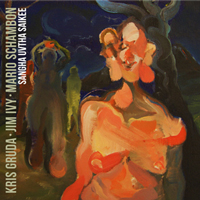
Last week saw the release of Sangha Uvtha Saikee, a trio recording, double CD from Kris Gruda, Mario Schambon and myself. This release on Bipediment Recordings can be purchased for as small an amount as $4 for download or $8, shipping included, for physical CD.

Soon to be released on ILSE is The Fortune by John Ajac and myself. You can read about the release and the ILSE label here.

Danny Feedback’s Crack Rock Opera will begin its three weeks of Saturdays on November 5th at the Parliament House. For advance ticket orders call the Bread and Circuses box office on 1-800-691-5131.

One of my pieces is included on a compilation CD  from the great ILSE label. The track, Upon Returning, can be heard here. The compilation entitled Little Bunny Was So Happy: Experimental Music From Florida is chock full of excellent improvised and experimental music tracks.

On October 24th I performed a solo saxophone/electronics/laptop live soundtrack to a short film by the Quay Brothers titled Rehearsals for Extinct Anatomies (1987) at Urban ReThink. It was a very satisfying performance and began sparking ideas for my next project. Stay tuned.

And above all, I wanted to point out and thank the photographers whose works are used on this website: Kris Gruda and Anna Funk. Kris Gruda is a musical cohort of mine and an amazing guitarist and improvisor. Anna Funk is an outstanding photographer and creative mind. She has a seriously keen eye and catches the deepest of moments. Thank you both very much.

Back To Work

Now that “The Fortune” is in the can and awaiting release on ILSE Music, it’s back to work on the shelved Bipediment Recordings releases that were placed on hold during post production of “The Fortune”.

First up is a double CD release of raw power from a trio of myself, Kris Gruda, and Mario Schambon. The trio recorded the day after my first curated event in 2010 at Stardust Coffee and Video called WMD 1, which took place on August 7.

WMD-1 was arranged so that each improvising performer was able to collaborate with the  performer before them, play a solo piece, then perform with the next improviser, and so on. This made for interesting duos, as well as allowing everyone solo performances.

Mario, whom I have known since the late 1990’s when we played together in Numb Right Thumb, was down here in Florida visiting from Atlanta. The show was initially set up so he and I could perform together. Kris Gruda, who has also been friends with Mario for some time, was added, and it grew from there.

The session that took place the next night was set up by Kris at his rehearsal space. It was truly an epic evening of improvisation.

I decided to title the CD “Sangha Uvtha Saikee”, phonetical spelling of sangha of the psyche, or loosely translated, brotherhood in consciousness.

“Sangha Uvtha Saikee” will be available through the Bipediment online ordering service or directly from me on October 15, 2011. It is a double CD release costing a mere $7.00.